
Process explained

How does a trigger capping machine work?

A trigger capping machine controls a linked sequence: the bottle is stabilised, the trigger closure is presented in a known orientation, the dip tube enters the bottle, the closure is seated and pre-threaded, and final tightening is applied. Reliable output depends on the interfaces between those stages, not on the tightening head alone.

Answer first

What stages make up an automatic trigger capping cycle?

An automatic trigger capping cycle normally separates bottle control, closure feeding, orientation, dip-tube entry, placement, thread start and tightening into defined functions. The exact mechanism varies by closure and machine configuration, but each stage should have a clear input condition, an expected result and a controlled response when that result is not achieved.

  1. Confirm that the correct bottle is present and stable.
  2. Present one trigger closure without damaging or tangling the dip tube.
  3. Orient the trigger body and guide the tube towards the bottle opening.
  4. Seat the closure squarely and establish a clean thread start.
  5. Apply final tightening while controlling bottle movement.
  6. Inspect, reject or hold affected packs when a fault occurs.
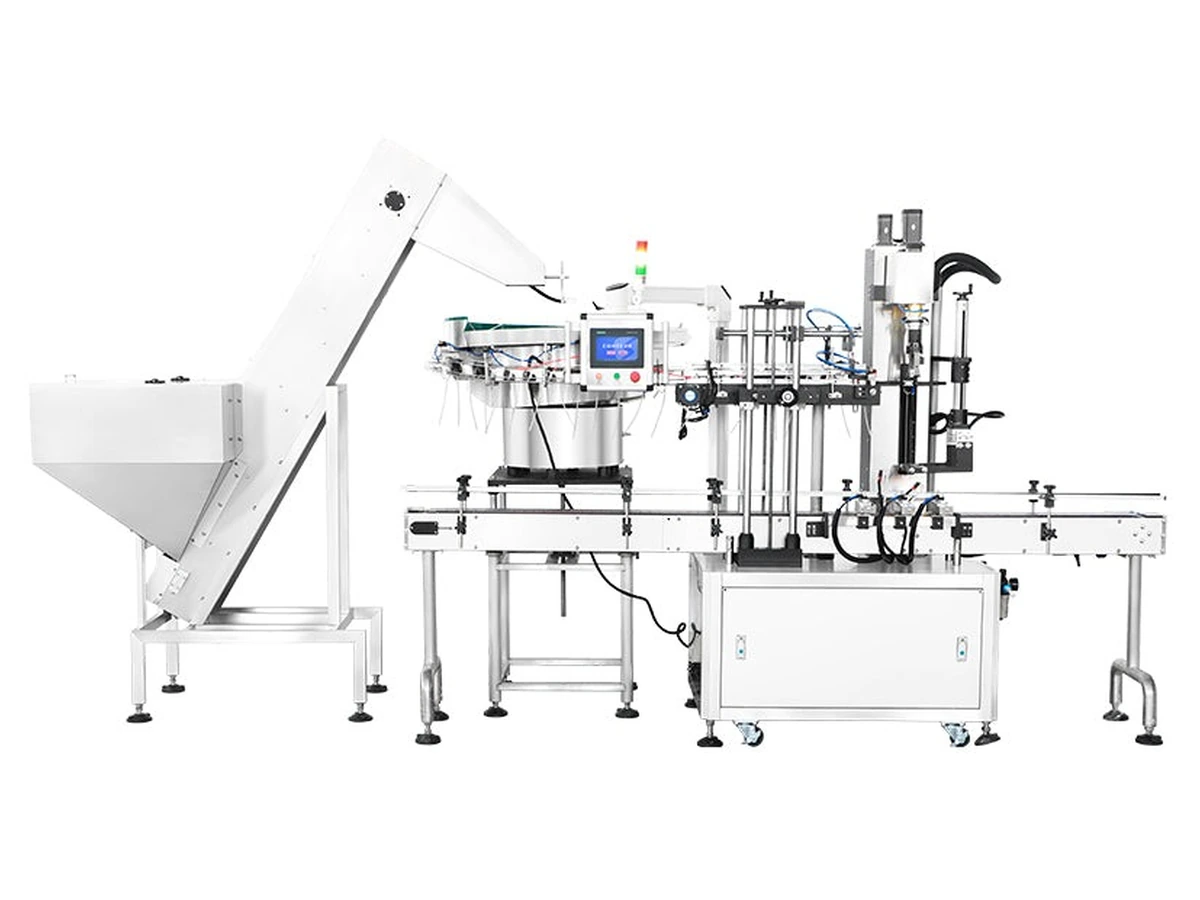
Automatic trigger sprayer capping machine with bottle conveyor and closure handling stations

Function by function

Why each stage needs its own acceptance evidence

A machine can appear to run smoothly while one stage is creating intermittent defects. Testing the functions separately makes the source of a problem easier to identify.

FunctionWhat the machinery must achieveEvidence to review
Bottle presentationDeliver one bottle at the correct pitch and keep it upright without unacceptable marking or distortion.Guide contact, filled-weight stability, bottle spacing and response to starvation or blockage.
Closure presentationDeliver one closure in the agreed orientation with the dip tube in a usable condition.Mis-orientation rate, recirculation path, tube tangling, buffer behaviour and replenishment.
Tube entry and placementGuide the tube through the neck and seat the closure squarely on the finish.Tube-end condition, missed entries, cap angle, cap height and any component marking.
Pre-threadingEstablish thread engagement without forcing a crooked closure.Clean start, consistent seating and absence of cross-threading across sample variation.
Final tighteningComplete the closure application using the agreed quality method.Torque or other approved check, cap height, appearance and functional pack inspection.
Fault recoveryStop predictably, identify affected bottles and return to an approved state.Alarm, safe clearance, disposition of held packs and first-off approval after restart.

Why is dip-tube control treated separately from tightening?

Dip-tube control must succeed before tightening begins. A correctly adjusted tightening head cannot recover a tube that has missed the bottle opening, folded against the neck or pulled the closure off-centre. Tube behaviour therefore needs its own trial conditions, inspection method and fault response.

Where do bottle stabilisation and pre-threading fit?

Bottle stabilisation holds the neck and body in a repeatable relationship to the closure. Pre-threading then starts the closure on the bottle thread before full tightening force is applied. These functions reduce the risk that bottle movement or cap skew becomes a cross-threaded or incompletely seated pack.

What should be observed in a machine demonstration?

Observe more than continuous motion. Check how closures are replenished, how the buffer behaves, whether tubes remain controlled, how the bottle is restrained, what happens when a bottle or closure is missing, and how affected packs are identified after a stop. Retain sample packs for the agreed quality checks.

When is manual closure placement still practical?

Manual placement may be practical for lower-volume, high-changeover or trial production where an operator can present each trigger accurately and the main need is repeatable tightening. Automatic feeding becomes more attractive when manual tube insertion limits sustainable output, consistency or operator workload.

This Lancing footage shows bottle transfer and capping motion. Use it to understand the visible sequence, then confirm suitability with the actual bottle, trigger closure, dip tube and agreed acceptance checks.
Call now01494 623015