
Start-up and handover

What should an operator check before starting a trigger capper?

Before starting a trigger capper, the operator should confirm the approved bottle and closure format, correct change parts and settings, clear bottle and closure paths, guards and safety devices in their normal state, suitable component supply, and the required first-off inspection method. The start-up should prove pack quality before sustained production begins.

Start-up framework

What should be checked before feeding closures?

Confirm the closure identity, dip-tube condition, feeder tooling, track clearance, orientation rule and buffer state. Check that no previous-format components remain in the bowl, track, chute or hand-off. For manual presentation, confirm the operator method and safe working position before bottles enter the capping stage.

  • Approved bottle, trigger and dip-tube samples are available.
  • Change parts and recipes match the scheduled format.
  • Guides, belts, clamps and heads are set to the approved references.
  • Guards, interlocks and emergency devices are in their normal condition.
  • Inspection tools and first-off criteria are ready.
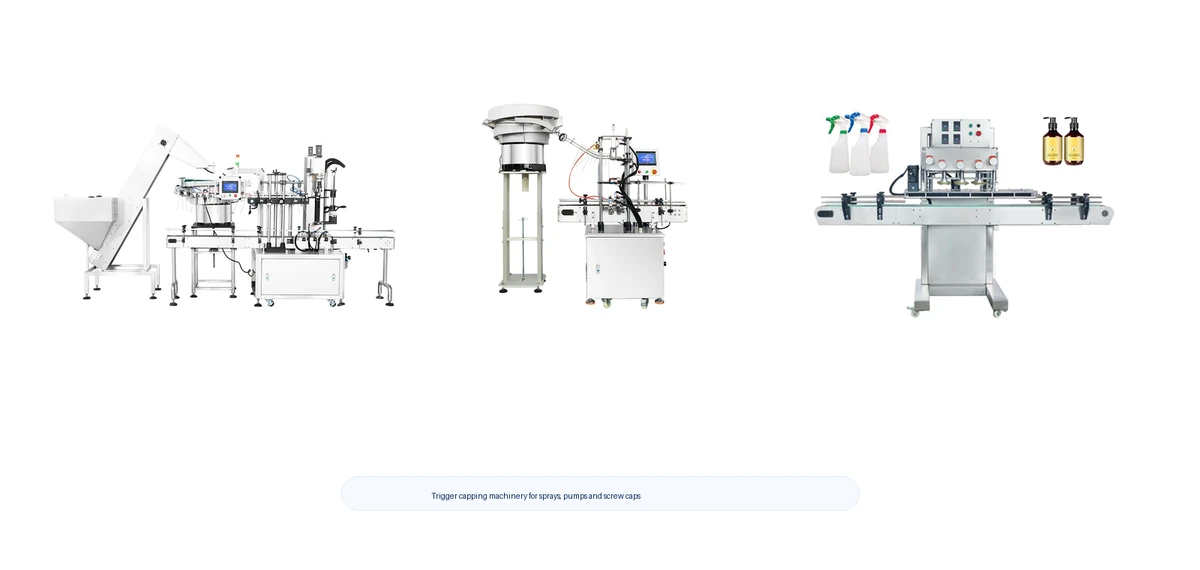
Range of trigger capping machinery used for operator start-up and format checks

First-off release

Start with controlled evidence, not immediate full demand

The first bottles should prove that the scheduled format, closure presentation and quality checks are correct before normal production conditions are introduced.

Start-up pointOperator evidence
Format identityCorrect bottle, trigger, dip tube, tooling, recipe and approved setting references.
Bottle handlingStable transfer, correct pitch and acceptable guide or belt contact.
Closure handlingCorrect orientation, usable dip-tube condition and reliable hand-off.
Thread and tighteningSquare seating, agreed cap height, torque or approved alternative, and no unacceptable marking.
Line statesExpected response to bottle absence, closure absence, starvation, blockage and controlled stop.
ReleaseRecorded first-off approval and segregation of any setup samples or affected packs.

How should a first-off sample be approved?

Use the inspection method defined for the project, normally including tube entry, cap seating, thread condition, cap height, torque or another agreed closure check, orientation and appearance. Record the format and settings, and retain samples where the quality plan requires them.

What should the operator record during production?

Record the format, start-up approval, planned checks, component replenishment, rejects, stops, alarms, adjustments and recovery actions. The record should distinguish normal operator tasks from interventions that change an approved setting or create an affected-pack hold.

When should the line be stopped rather than adjusted?

Stop under the approved procedure when pack quality is uncertain, a guard or safety function is not in its normal state, repeated faults occur, an unknown component is present, or an adjustment would exceed the operator's authorised role. Do not continue production while investigating a potentially affected closure condition.

What should be included in handover between shifts?

Handover should identify the running format, approved settings, component lots, feeder level, outstanding faults, recent adjustments, held packs, inspection status and any maintenance or quality action. The incoming operator should know the current approved state before restarting or changing demand.

Competence and safety: operator responsibilities must match the site risk assessment, training and safe system of work. The HSE's PUWER guidance includes training, inspection and maintenance topics for work equipment.

Call now01494 623015