Counts
Accepted packs, rejected packs by reason, closure demand, missed placement and any bottles routed for manual inspection.

Controls and data
Define line states, detection functions, reject evidence and controlled recovery for a connected trigger capping line.
Controls philosophy
Trigger capping reliability depends on more than a start button and a cycle sensor. The feeder, buffer, bottle transfer, placement station, tightening stage, inspection and downstream conveyor need clear operating states and handshakes. The controls scope should distinguish a temporary shortage of bottles or caps from a fault that requires intervention.
The exact sensor and control architecture depends on the selected machine. The purpose of this guide is to define the evidence and interfaces a buyer should request, not to claim that every listed device is included on every model.
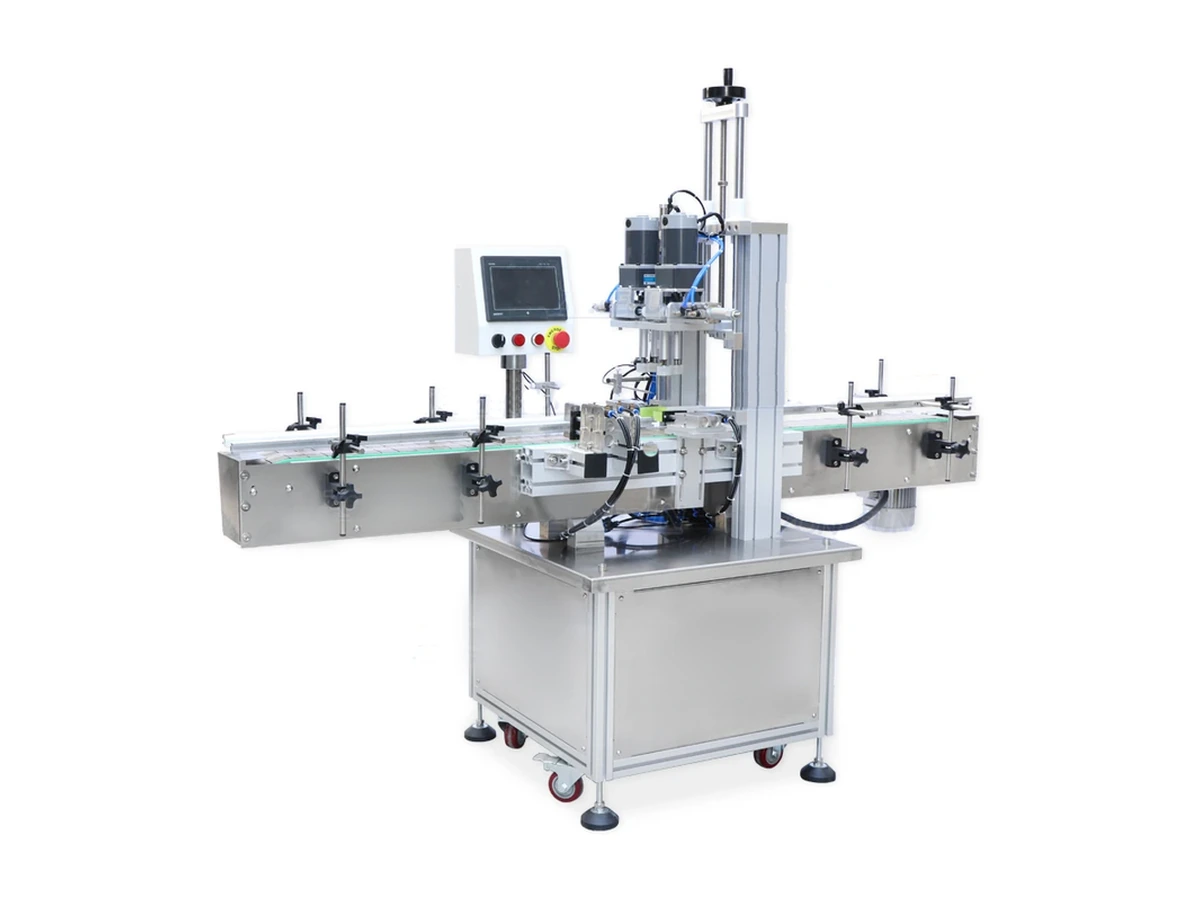
Line states
A shared definition avoids one machine continuing to feed closures or bottles when another machine cannot accept them.
| State | Expected behaviour | Evidence to agree |
|---|---|---|
| Ready | Guards and safety circuit healthy, required utilities available, correct format selected and no blocking fault present. | Ready signal conditions, reset rules and any checks still requiring operator confirmation. |
| Running | Bottles and closures advance under normal demand with accepted packs discharged or counted. | Run permissives, bottle tracking, buffer target and quality-monitoring action. |
| Starved | The capper waits because bottles or correctly presented closures are unavailable without creating a misleading fault. | Detection point, delay, upstream request and restart behaviour when supply returns. |
| Blocked | Downstream equipment cannot accept more bottles, so new cycles and closure consumption are controlled. | Blocked signal, accumulation limit, controlled stop and disposition of packs already inside the machine. |
| Fault | A defined abnormal condition stops the affected function and presents a clear alarm. | Fault category, safe stop, affected-pack window, access requirement and escalation path. |
| Recovery | The fault is cleared, the transfer path is checked and the machine returns through an approved restart sequence. | Reset authority, first-good-pack checks, buffer refill and upstream/downstream restart order. |
Detection and confirmation
| Function | Question to answer | Possible response to validate |
|---|---|---|
| Bottle presence and pitch | Is a bottle correctly located and stable before tube entry, placement or tightening? | Permit cycle, inhibit cycle, stop transfer or request bottle spacing correction. |
| Closure availability | Is a correctly presented trigger available at the hand-off point? | Request feeder demand, pause bottle release or alarm after a defined shortage. |
| Orientation | Does the trigger/nozzle meet the required presentation rule before placement? | Recirculate, reject, stop or prevent hand-off depending on the feeder design. |
| Placement confirmation | Has a closure reached the bottle and achieved the expected position before tightening? | Continue, stop, reject or flag the bottle for downstream inspection. |
| Cap height or position | Can a visible or measurable feature identify incomplete seating? | Reject or hold the pack, with limits proved against good and defective samples. |
| Tightening process | Which process variable or result is available from the selected capping method? | Record, alarm or reject only where the measured signal has been correlated with pack quality. |
| Reject confirmation | Did the intended bottle leave the accepted product flow? | Stop or alarm if a reject is commanded but not confirmed. |
| Buffer level | Is closure supply sufficient for short stops and normal replenishment? | Demand more parts, warn the operator or slow/stop bottle release before starvation. |
Useful production data
Data should help production and engineering distinguish component, feeder, placement, tightening and downstream causes. More tags are not automatically more useful.
Accepted packs, rejected packs by reason, closure demand, missed placement and any bottles routed for manual inspection.
Running, starved, blocked, fault and recovery time using definitions shared with the rest of the line.
Feeder replenishment, jam clearance, tooling adjustment, changeover and first-off release with operator-entered reason where appropriate.
Recipe or setup reference, bottle and closure format, approved tooling and settings revision.
Plain-language alarm, detection point, affected station and the safe action expected from the operator.
Link machine events to retained samples or inspection results so recurring defects can be traced to the operating state.
Connect these definitions to the trigger capping line integration guide, prove them in the FAT and SAT checklist and use the quality inspection guide to define reject evidence.
Recovery design
Define which bottles and closures may be incomplete or damaged when a fault occurs and how they are held, removed or inspected.
The machine-specific risk assessment determines guarding, interlocks, isolation and permitted recovery actions. Normal reset must not substitute for safe isolation where access requires it.
Check the bowl, track, gripper, tube guide, bottle location and tightening area for damaged or misorientated components before restart.
Refill the required buffer, restore the line in the agreed order and inspect first-off packs before normal acceptance resumes.
Buyer questions
The required tracking depends on machine layout, inspection and reject strategy. It becomes important when a fault or reject command must be tied to a specific bottle.
Only where the selected process signal has been validated against an approved pack-quality method. A sensor name alone does not prove closure quality.
Define it from capper demand, normal replenishment time, short-stop behaviour, closure geometry and the point at which tube condition or orientation degrades.
The control sequence should prevent unnecessary closure circulation or buffer consumption while preserving a controlled restart. The exact action depends on the machine arrangement.
It is evidence that a bottle commanded for rejection was actually removed or diverted from the accepted product path.
State time, alarm reason, format, intervention, rejected-pack reason and the sequence around the event are normally more useful than an unexplained total stop count.
Share the line layout, upstream and downstream signals, reject strategy, bottle flow and closure-feed method for an integration review.
Production record
Control data becomes useful only when it can be linked to component identity, accepted packs and operator action. The run log should combine automatic events with the context that sensors cannot know by themselves.
| Record source | What it can show | Context still needed |
|---|---|---|
| PLC or HMI event | Fault time, machine state, sensor condition, stop reason or reset sequence where programmed. | Format, component lot, operator action, affected packs and whether the event was planned. |
| Counter | Machine cycles, accepted count or reject count where the counting point and logic are defined. | Setup packs, reworked packs, held packs, starved/blocked periods and inspection disposition. |
| Quality inspection | Cap height, torque/functional result, appearance, tube entry and orientation at the inspection time. | Machine settings revision, sample identity, elapsed time and component lots. |
| Operator entry | Replenishment, cleaning, changeover, adjustment, jam clearance and observed component behaviour. | Consistent event categories, time, person/role and first-off release after intervention. |
| Maintenance record | Parts changed, wear condition, calibration or repair activity. | Reason for work, before/after result and settings or quality checks affected. |
Yes. Automatic events provide consistent timestamps and states, while operators add component, replenishment, intervention and quality context. The two records should use shared event names and format identities so they can be reviewed together.
A useful reject category describes the observed result without assuming an unproven cause. Examples include missing closure, high cap, cross-thread, trapped tube, cosmetic mark or wrong orientation. Cause can then be investigated against feeder, placement, tightening, components and line state.
The site should set a retention period that supports product traceability, quality investigation, maintenance and customer requirements. The machinery brief should define what data is available and how it can be exported or reviewed, rather than assuming every control system provides long-term storage.
A settings revision shows which approved configuration was used and whether an adjustment occurred during the run. It prevents a quality result being compared with the wrong setup and makes first-off approval after changeover or maintenance easier to verify.
Use the full trigger capping production run log guide with the finished-pack inspection plan.