PUWER and use at work
HSE’s PUWER overview covers suitability, maintenance, inspection, information, instruction, training and protective measures for work equipment.
Read HSE PUWER overview →
Safety and compliance context
Review guarding, access, controls, isolation and installed-line responsibilities before trigger capping machinery is put into use.
Safety planning
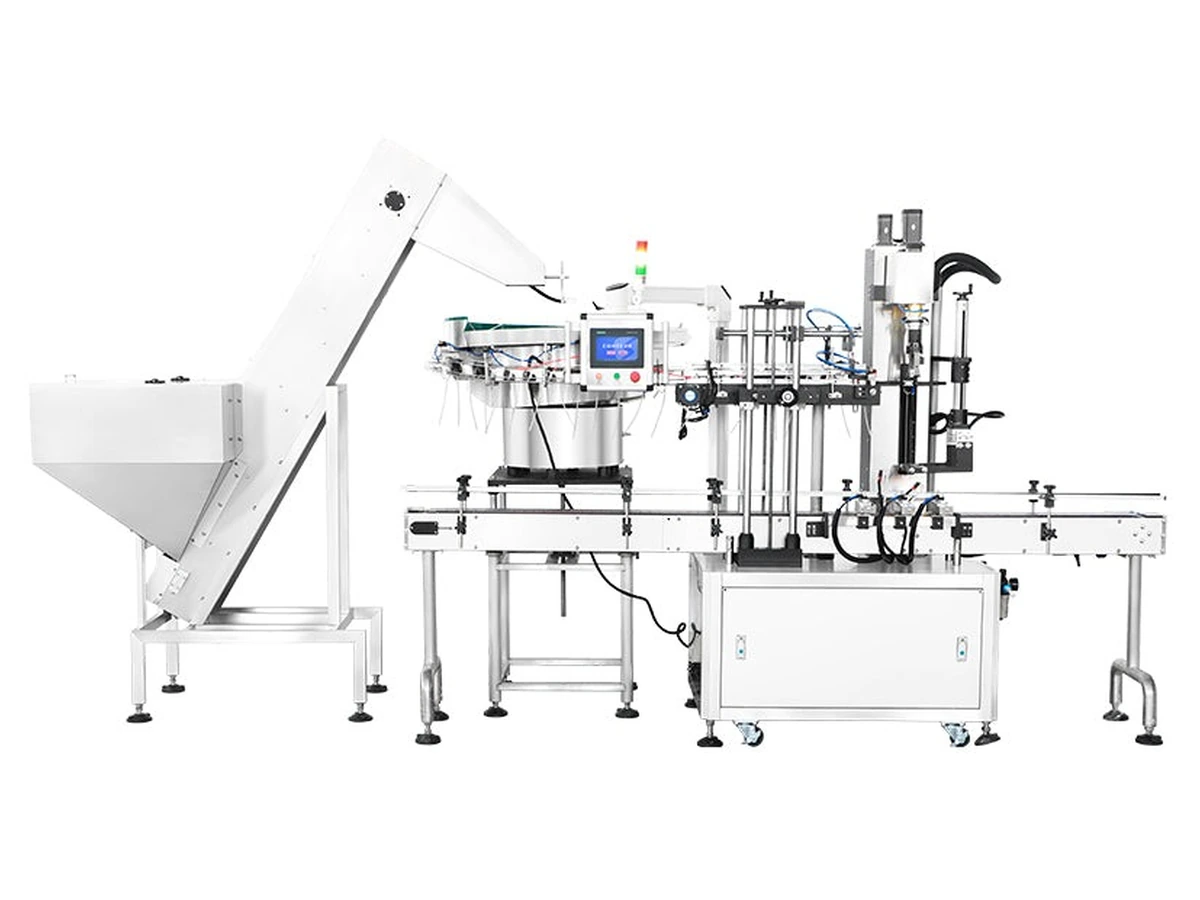
A trigger capping project may combine a feeder, bowl, track, transfer, tube guide, bottle conveyor, placement mechanism, tightening head, reject device and surrounding machines. Guarding, controls and safe access must be assessed for the complete installed arrangement and the tasks people actually perform.
HSE guidance explains that PUWER duties apply to organisations that own, operate or control work equipment. Equipment should be suitable, maintained, inspected where required, used by trained people and accompanied by appropriate protective measures. This page is general buyer guidance only; it is not a machine risk assessment or a statement that a particular configuration complies.
Official UK context
The applicable duties depend on whether machinery is being supplied, installed, modified or used at work.
HSE’s PUWER overview covers suitability, maintenance, inspection, information, instruction, training and protective measures for work equipment.
Read HSE PUWER overview →HSE’s machinery-safety guidance explains risk assessment, prevention of access to dangerous parts and control of remaining risk.
Read HSE machinery guidance →Government guidance covers requirements that apply before machinery is placed on the GB market or put into service.
Read GOV.UK supply guidance →Task and hazard review
| Task or area | Questions to resolve | Evidence required before use |
|---|---|---|
| Bulk closure loading | Can the operator reach moving bowl, elevator or agitation parts? Are lifting, access and spill controls suitable? | Approved loading method, access arrangement, guarding and operator instruction. |
| Track and transfer | Are there trapping, drawing-in, crushing or unexpected-movement hazards at gates, grippers or transfer mechanisms? | Risk-reduction measures, interlock or fixed-guard design and safe recovery method. |
| Bottle handling | Can side belts, clamps, star wheels or indexed tables create nip, crush or shear points? | Guarding and safe-distance assessment for normal running, setup and clearance. |
| Capping head | What vertical, rotational, pneumatic or servo movement is possible and what stored energy remains? | Prevention of access, stop/isolation method and maintenance procedure. |
| Changeover and adjustment | Which tasks require access, tools, powered movement or a special setting mode? | Authorised method, safe controls, speed/hold-to-run arrangement where applicable and competence requirement. |
| Jam clearance | Can normal reset, gravity, pressure or stored parts cause unexpected movement after a blockage is removed? | Defined stop/isolation boundary, clearance method, affected-pack check and restart approval. |
| Cleaning and product residue | Do chemicals, wet surfaces, drips or cleaning agents introduce exposure, slip, material or electrical risks? | Product/SDS review, cleaning procedure, compatible materials and safe waste/containment arrangements. |
| Line integration | Do new gaps, transfer points or control interactions appear between filler, conveyor, capper, labeller or reject device? | Complete-line risk assessment, interface drawings, stop categories and validation of safety functions. |
Controls and access
Stops the process in the intended production sequence. It may leave power or stored energy available and is not automatically suitable for maintenance access.
Provides a rapid response to an emergency but does not replace guarding, risk reduction or a safe method for routine intervention.
The required interlocking and reset behaviour must be selected through risk assessment, including run-down, stored energy and access to adjacent zones.
Maintenance, cleaning or unblocking may require secure isolation from electrical, pneumatic, mechanical or other energy sources using the site’s approved procedure.
Adding a feeder, conveyor, reject device, remote control or new operating mode can change the hazards and responsibility for the complete assembly. Review the effect before the modified arrangement is put into service.
Buyer evidence
Normal operation, loading, changeover, inspection, cleaning, fault response, unblocking and maintenance.
Operator positions, material routes, doors, walkways, visibility, service access and surrounding machinery.
Electrical, pneumatic, mechanical, gravity, springs, pressure and any product-related energy or hazard.
Guard/interlock zones, emergency stops, reset positions, safe modes and line-wide stop interaction.
Instructions, warnings, settings, maintenance boundaries, competence and handover records.
Risk assessment, installation, inspection, safe procedures, maintenance, change control and ongoing supervision.
Use the operator training and handover guide, the controls and recovery guide and the installation and commissioning page alongside the site-specific assessment.
Buyer questions
No. Emergency stop is a supplementary protective measure and does not replace prevention of access or other risk reduction selected through assessment.
That depends on the hazard and machine-specific procedure. A normal stop may not remove stored energy or prevent unexpected movement; safe isolation may be required.
PUWER places duties on employers and others who own, operate or control work equipment. Obtain competent advice for the actual arrangement and use.
No. Protective measures and competent information, instruction, training and supervision work together.
The complete assembly and its interfaces must be assessed. Individual machine information remains useful, but it may not cover hazards created by integration.
No. It is general purchasing guidance. Compliance and safe use require review of the specific machine, documentation, installation, task and site.
Share the line layout, tasks, products, utilities, access and surrounding machinery so the project scope can reflect the installed arrangement.