1. Stop, isolate and make safe
Follow the machine instructions and site risk assessment. A normal stop or emergency stop is not automatically safe isolation for cleaning or access.

Cleaning and changeover
A practical guide to safe isolation, component line clearance, cleaning boundaries, format setup and first-off approval for trigger capping machinery.
Answer first
A trigger capper changeover should start with the site’s safe-stop and isolation procedure, followed by removal of the previous bottles, trigger closures, dip tubes, rejects, labels or loose components from the agreed line boundary. Clean component-contact and contamination-prone surfaces using the supplied machine instructions and site-approved method, then inspect, reassemble, set the new format and approve first-off packs.
Many capping-machine surfaces are not intended to contact product directly, but spills, aerosols, residue, damaged closures and bulk-component debris can affect belts, guides, sensors, feeder tracks and finished-pack quality. The required method depends on the product, risk assessment, machine construction and production sequence.
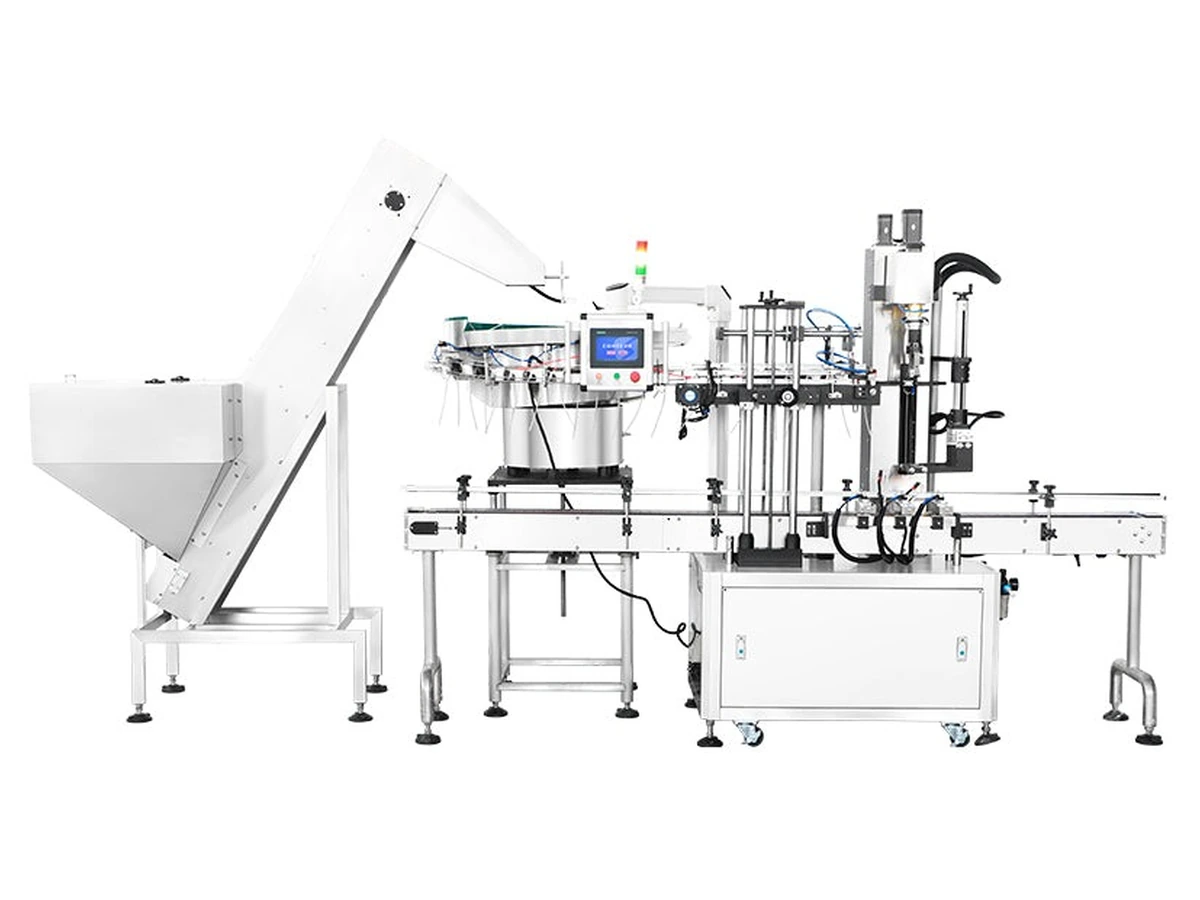
Cleaning boundary
| Area | Line-clearance or cleaning concern | Release evidence |
|---|---|---|
| Hopper, bowl or bulk feeder | Previous closure format, damaged components, dust, labels, mixed lots, tube tangles or residue. | Empty/clear inspection, correct new closure and lot identity. |
| Track, escapement and transfer | Closures or tubes trapped under covers, wear debris, burrs, static-related contamination or incorrect guides. | Path inspection, correct tooling and controlled manual cycle where permitted. |
| Placement and tube guide | Product residue, damaged tubes, loose components, contact marks or incorrect format parts. | Clean condition, correct part identity and sample tube-entry check. |
| Belts, chuck, spindle or tightening tooling | Residue, polish, wear debris, component fragments, incorrect pressure/contact or wrong tooling. | Clean/dry condition, tool inspection and approved first-off result. |
| Bottle guides, clamps and conveyor | Spillage, glass/plastic debris, previous labels, wrong guide position or contamination traps. | Line clearance, clean surface and correct format setting. |
| Sensors, guards and reject path | Obscured sensors, trapped packs, full reject container or contamination affecting detection. | Sensor check, clear reject route and safety-function status as required. |
Changeover sequence
Follow the machine instructions and site risk assessment. A normal stop or emergency stop is not automatically safe isolation for cleaning or access.
Remove bottles, closures, tubes, rejects, labels, loose parts and documentation from the defined line boundary. Record component disposition where traceability requires it.
Use materials and chemicals compatible with the machine, closures and site procedure. Prevent liquid or debris entering unsuitable electrical, pneumatic or mechanical areas.
Check wear, damage, fasteners, guards, sensors and the identity of guides, grippers, tooling or recipes required for the next bottle and trigger.
Confirm only the new materials remain, then check orientation, tube entry, thread engagement, cap height, torque/functional result, appearance and reject handling.
Safety boundary
Cleaning and intervention must follow the supplied machine instructions, the installed-line risk assessment and the employer’s arrangements for work equipment. HSE’s PUWER overview explains employer duties for work equipment. Where flammable, explosive or corrosive substances may be present, review the site’s substance assessment and HSE’s DSEAR guidance. This page cannot confirm a site-specific method or compliance.
Buyer questions
The capper may not have a designed product path, but product spills, wet bottle necks, aerosols or leaking packs can contaminate guides, belts, sensors and tooling. Define the actual exposure and site hygiene requirement.
Empty and clear it when the closure format, colour, lot-control rule or contamination risk requires line clearance. The site procedure should define whether same-format lot changes can use a controlled reconciliation instead.
Only if the supplied machine construction, electrical protection, materials and instructions permit the proposed method. Do not assume general stainless-steel appearance means the complete machine is washdown-rated.
Check that guards and covers are restored, sensors are clear, tooling is correctly fitted, no cleaning material remains, lubrication is unaffected and first-off packs pass the agreed quality checks.
Define the line-clearance boundary, remove trapped parts, reconcile remaining components, identify new materials and use an independent check before loading. Include the hopper, bowl, track, transfer and reject path.
Provide products and SDS information where relevant, spill or aerosol risk, cleaning chemicals, required method, production sequence, line-clearance rules, washdown expectation and site access constraints.
Send the product sequence, bottle and trigger formats, cleaning method, site risk controls, changeover targets and first-off checks.